


A SUCCESSFUL GMP PROJECT DOES NOT BEGIN ON THE EQUIPMENT INSTALLATION
When investing in a new piece of equipment or a production line, manufacturers often focus heavily on delivery, installation, and commissioning milestones. However, many risks that may affect project timelines, budgets, and validation activities arise much earlier, during the design and manufacturing stages at the supplier’s facility.
If deviations are only identified after the equipment has arrived on-site, companies may need to reschedule specialists, materials, and implementation activities, while also updating technical documentation or validation plans. Factory Acceptance Testing (FAT) should therefore be viewed as a project risk-control milestone rather than merely a payment formality before shipment.
WHAT IS FAT?
Factory Acceptance Testing (FAT) is an inspection and acceptance activity conducted at the supplier’s manufacturing facility before the equipment is packed and shipped. The test program is developed based on the contractual scope, approved design, URS, and acceptance criteria agreed by the parties.
The objective goes beyond confirming that the machine can operate. FAT also helps assess the suitability of the configuration, functions, documentation, operability, and quality-related requirements for the intended use.
WHY IS IT MORE ADVANTAGEOUS TO IDENTIFY DEVIATIONS AT THE OEM FACILITY?
While the equipment remains at the OEM facility, the design, mechanical, electrical, software, and assembly teams can coordinate and address issues directly. Access to components, tools, and design documentation is also easier than after the system has been dismantled and transferred to the site.
A well-prepared FAT helps reduce the risk of late changes, avoid prolonged SAT activities, and minimize the consumption of trial materials at the user’s facility. This delivers direct value to both the project owner and the equipment supplier.
KEY AREAS TO BE REVIEWED DURING FAT
1. VERIFICATION OF THE EQUIPMENT AGAINST THE URS AND APPROVED DESIGN
- Mechanical, electrical, and control-system configuration
- Product-contact materials and surface-finish quality
- Measuring instruments, sensors, and utility connections
- Contractual scope of supply, accessories, and format parts
2. FUNCTIONAL TESTING AND OPERATING SCENARIOS
- Operating sequences in the agreed modes
- Alarms, interlocks, and operating permissive conditions
- Simulation of selected fault scenarios appropriate to the FAT scope
- Restart or recovery capability after an interruption
3. REVIEW OF COMPLIANCE-SUPPORTING FUNCTIONS
- User management and access authorization
- Data storage, retrieval, and protection
- Audit trails and electronic records, where applicable
- Cleanability, maintenance access, and calibration capability
4. REVIEW OF TECHNICAL DOCUMENTATION
- Layout drawings, electrical and pneumatic diagrams, and P&IDs, where applicable
- Operating, maintenance, and safety instructions
- Component and spare-parts lists, and material certificates
- FAT protocol, report, and punch list of items requiring corrective action after FAT
POSITION OF FAT IN THE EQUIPMENT LIFECYCLE
| Requirements Definition and Design Control | Factory Acceptance Testing | Site Implementation and Demonstration of Fitness for Use | ||||
| URS | DQ | Manufacturing | FAT | Delivery & Installation | SAT / IQ / OQ | PQ & Operation |
| → | → | → | → | → | → | |
Figure 1. Illustration prepared by Melchers based on the lifecycle and risk-management approach of ISPE GAMP® 5. This is not an original reproduction from ISPE materials.
FAT BUILDS THE FOUNDATION FOR SAT AND VALIDATION ACTIVITIES
FAT does not replace SAT, IQ, OQ, or PQ. However, the data and documentation verified during FAT can help the project team prepare more effectively for subsequent implementation stages, particularly when the test scope is defined early and is traceable to the URS.
Any nonconformities should be clearly documented, assigned, and tracked through closure. Transparent management of the open-item list helps prevent an issue from being carried through multiple stages without a resolution decision.
ON-SITE FAT, REMOTE FAT, OR A HYBRID APPROACH?
The FAT format should be selected according to the equipment’s complexity, degree of customization, and risk. Remote FAT may be suitable for certain items that can be clearly observed and supported by shared data. By contrast, integrated lines, aseptic systems, or equipment with multiple interfaces often require the on-site presence of Engineering, QA, and Production representatives.
Under a hybrid model, the project team can clearly distinguish which activities must be witnessed on-site and which can be assessed through documents, videos, or online connections.
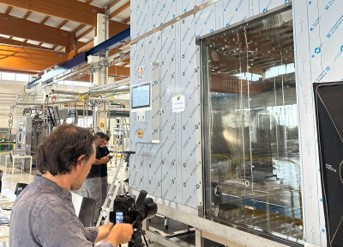
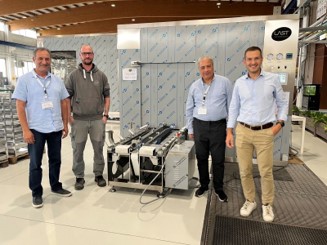
Images: FAT acceptance testing of washing equipment and sterilizers together with the end user and engineering team at the manufacturing facility of LAST Technology, Italy, and via remote FAT.
MELCHERS’ ROLE IN THE JOURNEY FROM URS TO FAT
Melchers coordinates with customers and equipment manufacturers to clarify requirements, align the test scope, and follow up on items requiring completion before shipment. Early involvement of all parties helps reduce the gap between plant requirements, OEM design, and the on-site validation plan.
The value of FAT does not lie in completing a checklist. Its real value is to create sufficiently clear technical evidence for the shipping decision while establishing a sound foundation for installation, SAT, validation, and long-term operation.
FROM EQUIPMENT ACCEPTANCE TO A SUSTAINABLE INVESTMENT
Pharmaceutical equipment may serve a plant for 10-25 years or even longer. Therefore, decisions made during the URS, design, and FAT stages can directly affect operability, maintenance, product changeovers, and compliance throughout the system lifecycle.
Taking FAT seriously enables companies to shift from reactive troubleshooting to proactive risk control before technical issues become costs and delays at the site.
FREQUENTLY ASKED QUESTIONS ABOUT FAT IN THE PHARMACEUTICAL INDUSTRY
How Is FAT Different from SAT?
FAT is performed at the manufacturer’s facility before shipment. SAT is performed after the equipment has been transported to and installed at the user’s site.
Does FAT Replace IQ, OQ, or PQ?
No. FAT provides pre-shipment test evidence and supports preparation for on-site activities, but it does not replace validation stages required by pharmaceutical regulations or the plant’s validation plan.
Who Should Participate in FAT?
The team composition depends on the project scope. Representatives from Engineering, Production, QA, and Validation should typically be considered to cover operational, quality, and documentation requirements.
Which Equipment Should Undergo FAT?
The need for FAT should be determined based on risk, complexity, degree of customization, and the equipment’s impact on product quality or the project schedule.




 English
 Vietnamese