


Pharmaceutical freeze drying is essential for producing stable, high-quality medicines. However, pharmaceutical manufacturers must meet strict Good Manufacturing Practice (GMP) requirements while improving energy efficiency and maintaining product quality.
The revised EU GMP Annex 1 places greater emphasis on contamination control and aseptic processing. Therefore, manufacturers must ensure that pharmaceutical freeze dryers, freeze-thaw systems and loading and unloading equipment meet applicable regulatory requirements.
Through its partnership with HOF Sonderanlagenbau GmbH, Melchers Vietnam supports pharmaceutical manufacturers in Vietnam with access to specialised freeze-drying technologies and pharmaceutical equipment solutions. These technologies are designed to support reliable production, contamination control and energy-efficient operation.
In this article, Melchers Vietnam explores the key GMP requirements for pharmaceutical freeze drying, the challenges of EU GMP Annex 1 compliance and the technologies available to support modern pharmaceutical manufacturing.
1. WHAT ARE THE GMP REQUIREMENTS FOR PHARMACEUTICAL FREEZE DRYING?
Pharmaceutical freeze drying, also known as lyophilisation, must comply with several regulatory frameworks. These frameworks cover sterile manufacturing, equipment qualification, process validation, risk management and electronic data integrity.
The main regulatory references include:
- EU GMP Annex 1: Requirements for sterile medicinal product manufacturing, including contamination control and aseptic processing.
- FDA aseptic processing guidance: US expectations for sterile drug manufacturing.
- GMP qualification and validation: Requirements for demonstrating that equipment and processes perform as intended.
- ICH Q9 and Q10: Principles for quality risk management and pharmaceutical quality systems.
- EU GMP Annex 11: Requirements for computerised systems used in GMP-regulated environments.
- FDA 21 CFR Part 11: Requirements for electronic records and electronic signatures within its scope.
Together, these frameworks help pharmaceutical manufacturers maintain product quality, protect patients and ensure consistent manufacturing processes.
HOF Sonderanlagenbau develops pharmaceutical freeze-drying systems with design and documentation features intended to support applicable GMP requirements. These include equipment specifications, risk assessments, hardware and software documentation, and installation and operational qualification (IQ/OQ) documentation, as appropriate to the project.
For pharmaceutical manufacturers in Vietnam, Melchers Vietnam provides a local point of contact to discuss HOF technologies and identify equipment solutions suited to their production requirements.
2. WHY ARE PHARMACEUTICAL FREEZE-DRYING REGULATIONS BECOMING STRICTER?
Regulatory expectations for pharmaceutical freeze drying continue to evolve. In particular, manufacturers face greater scrutiny of contamination control, aseptic handling and process validation.
Stronger contamination control
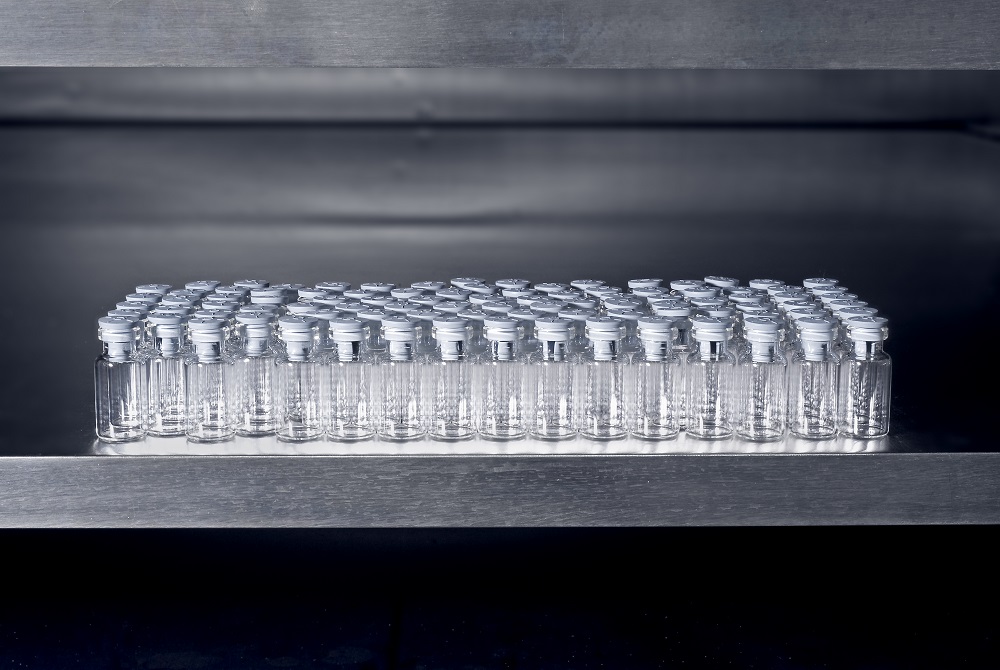
Freeze drying often involves partially stoppered vials during transfer, loading and processing. Consequently, manufacturers must carefully control these activities to minimise the risk of microbial contamination and particle ingress.
EU GMP Annex 1 requires manufacturers to address relevant risks through a comprehensive, site-specific Contamination Control Strategy (CCS). Depending on the process, controls may include Grade A protection, suitable barrier technology, environmental monitoring and validated sterilisation procedures.
Greater focus on aseptic handling
Loading and unloading are critical stages in pharmaceutical freeze drying. Manual interventions can introduce contamination or disturb protective airflow.
Automated handling systems, robotic technologies and appropriate barrier solutions can help reduce direct human intervention and support consistent aseptic operations.
Growing demand for biologics
Biologics, vaccines and advanced therapy medicinal products (ATMPs) can be particularly sensitive to temperature and storage conditions. Freeze drying can improve the stability and shelf life of suitable products.
However, contamination and process variability can have serious consequences. Therefore, manufacturers must establish robust processes and demonstrate that their equipment performs consistently.
Increased automation and lifecycle validation
Modern GMP compliance extends beyond equipment installation. Manufacturers must also consider qualification, process performance, maintenance, software validation and change control throughout the equipment lifecycle.
This approach is often described as compliance by design. Equipment should be engineered to support contamination control, validated performance and efficient operation from the beginning.
3. WHICH REGULATIONS ARE MOST CHALLENGING FOR PHARMACEUTICAL FREEZE DRYING?
EU GMP Annex 1 is a key reference for sterile medicinal product manufacturing in Europe. It presents specific challenges for lyophilisation because partially stoppered vials may be exposed during transfer, loading and unloading.
Manufacturers must assess these activities within their Contamination Control Strategy and implement appropriate controls based on process risks.
Important considerations include:
- Aseptic protection: Maintaining appropriate environmental conditions during critical handling steps.
- Barrier technology: Assessing whether restricted access barrier systems (RABS) or isolators are appropriate.
- Sterilisation and SIP: Validating applicable sterilisation and steam-in-place procedures.
- Equipment integrity: Establishing appropriate leak testing and integrity controls.
- Environmental monitoring: Monitoring relevant conditions in critical areas.
- Aseptic process simulations: Representing relevant loading, unloading and interventions during media fills, where applicable.
For US-facing projects, manufacturers must also consider the FDA’s guidance on sterile drug products produced by aseptic processing, alongside applicable regulations under 21 CFR Parts 210 and 211.
HOF Sonderanlagenbau designs equipment intended to support applicable EU GMP Annex 1 and FDA requirements. Its Freeze-Viewer Professional software provides process control and visualisation capabilities that support cGMP documentation and applicable electronic-record requirements, depending on configuration and validation.
4. WHAT SHOULD A GMP-COMPLIANT LOADING AND UNLOADING SYSTEM INCLUDE?
A pharmaceutical loading and unloading system should minimise contamination risks while supporting reliable, repeatable material handling.
The appropriate design depends on the product, manufacturing process, facility layout and contamination control strategy. Important considerations include automation, suitable barrier interfaces, sterilised transfer paths where required, defined hold times, protection of critical airflow and appropriate representation of aseptic interventions during process simulations.
HOF Sonderanlagenbau offers specialised technologies to address these requirements.
HOF VTS Vial Transfer System
The HOF VTS vial transfer system focuses on reliable operation, hygienic design and efficient cleaning.
Machine parts located in classified areas are designed with cleanability in mind. Features include suitable materials, large radii and components that can be disassembled for cleaning.
The system also supports shorter changeover times through a simplified format-part design and Siemens TIA Portal control technology.
These features can help pharmaceutical manufacturers improve operational efficiency while maintaining appropriate hygiene standards.
HOF SIRIUS Robotic Loading and Unloading System
The HOF SIRIUS robotic loading and unloading system uses electromagnetic transport technology to reduce glass-to-glass contact.
By eliminating conveyor belts and reducing potential sources of particle generation, the system supports cleaner material handling. Its robotic approach can also reduce manual intervention during critical operations.
Both VTS and SIRIUS support row-by-row loading and unloading, helping manufacturers maintain product traceability throughout the process.
For pharmaceutical companies in Vietnam, Melchers Vietnam provides a local contact for enquiries about HOF’s vial transfer, robotic loading and unloading technologies. Manufacturers can discuss their production layouts, handling requirements and potential applications with the relevant technical teams.
5. CAN EXISTING FREEZE DRYERS BE UPGRADED TO MEET ANNEX 1 EXPECTATIONS?
Yes. In many cases, pharmaceutical manufacturers can improve existing production lines without replacing the entire freeze-drying system.
A complete replacement can involve significant capital investment, production downtime and requalification activities. Therefore, targeted upgrades may offer a practical alternative when existing equipment remains suitable for continued operation.
HOF can integrate modern loading and unloading solutions, including the SIRIUS robotic system, into new and existing production lines, subject to technical assessment and compatibility.
Depending on equipment condition and project requirements, manufacturers may also consider control-system upgrades or refrigeration retrofits.
Every modification should undergo appropriate risk assessment and change control. Required qualification, validation and regulatory assessments must be determined before the upgraded system returns to production.
6. HOW DO FREEZE DRYERS MEET COMPUTERISED SYSTEM AND DATA INTEGRITY REQUIREMENTS?
Modern pharmaceutical freeze dryers rely on automated controls, electronic recipes, sensors, process data and batch reports. As a result, computerised system compliance is an important part of GMP manufacturing.
Two key regulatory references are EU GMP Annex 11 and FDA 21 CFR Part 11. Their applicability depends on the system, its intended use and the relevant regulatory framework.
Manufacturers should assess several important areas:
- Access control: Restricting system access according to authorised user roles.
- Audit trails: Recording relevant changes and activities where required.
- Electronic records: Maintaining accurate, complete and retrievable process documentation.
- Recipe management: Controlling recipe changes and software versions.
- Data backup and recovery: Protecting records against loss.
- Software validation: Demonstrating that the system is fit for its intended use.
- Data integrity: Applying relevant ALCOA+ principles to maintain reliable and trustworthy records.
HOF’s control and visualisation software supports process monitoring and electronic documentation. The Freeze-Viewer Professional provides process visualisation and documentation capabilities that can support the manufacturer’s data integrity and validation processes.
Melchers Vietnam can connect local pharmaceutical manufacturers with HOF’s equipment solutions when evaluating automation, process monitoring and documentation requirements.
The final compliance status depends on system configuration, validation activities, operating procedures and the manufacturer’s quality management system.
7. CAN PHARMACEUTICAL FREEZE DRYING IMPROVE ENERGY EFFICIENCY WITHOUT COMPROMISING GMP?
Yes. Pharmaceutical manufacturers can reduce energy consumption while maintaining GMP compliance, provided that energy-saving measures do not compromise validated process performance, product quality or sterility assurance.
Potential improvements include optimising refrigeration, condenser performance, shelf temperature control, vacuum operation, heat transfer and cycle duration.
Any change that affects critical process parameters must be appropriately assessed and qualified or validated, as applicable.
HOF CryoBlizzard Technology
HOF’s CryoBlizzard technology is designed to improve energy efficiency in freeze-drying applications.
According to HOF, the technology can deliver energy savings of 5–10% compared with comparable processes. It uses ambient air as the refrigerant, has a stated global warming potential (GWP) of zero and incorporates heat-recovery capabilities.
These features provide an option for manufacturers seeking to reduce energy consumption and environmental impact. Actual savings depend on the application and operating conditions.
HOF CAR6 Natural Refrigerant System
HOF also offers natural-refrigerant solutions, including the CAR6 system.
These technologies provide another option for manufacturers seeking to reduce the environmental impact of refrigeration while maintaining the required equipment performance.
For pharmaceutical manufacturers, energy efficiency should be evaluated alongside process requirements, qualification needs, operating costs and lifecycle performance.
Through its partnership with HOF Sonderanlagenbau, Melchers Vietnam helps Vietnamese pharmaceutical manufacturers explore specialised equipment solutions that address both production requirements and energy-efficiency objectives.
8. WHAT SERVICE AND SUPPORT DO PHARMACEUTICAL FREEZE DRYERS REQUIRE?
Reliable technical support is essential for maintaining pharmaceutical freeze dryers throughout their operational life.
Preventive maintenance, timely repairs and access to spare parts can help reduce unexpected downtime and maintain equipment performance.
HOF Sonderanlagenbau provides technical support for its systems throughout their service lives. Its support offering includes:
- 24-hour emergency service.
- Access to an inventory of more than 60,000 spare parts.
- Equipment installation and commissioning.
- Operator training.
- Annual maintenance programmes.
The scope of support depends on the equipment, service agreement and customer requirements.
For pharmaceutical manufacturers in Vietnam, Melchers Vietnam serves as a local business contact for enquiries about HOF equipment and potential project requirements. Specific service arrangements, technical support responsibilities and response times should be confirmed for each project.
9. HOW RELIABLE ARE HOF PHARMACEUTICAL FREEZE-DRYING SYSTEMS?
Reliability is a critical consideration when selecting pharmaceutical freeze-drying equipment. Equipment downtime can disrupt production schedules, increase operating costs and affect product availability.
HOF designs its systems with a focus on long-term performance, using quality components, preventive maintenance programmes and, where specified, redundant refrigeration options.
According to HOF, its systems are designed for an operational service life exceeding 25 years, subject to equipment configuration, operating conditions and maintenance.
When selecting pharmaceutical freeze-drying equipment, manufacturers should evaluate process performance, service availability, spare-parts support, energy consumption and lifecycle costs.
Melchers Vietnam can help local manufacturers explore HOF’s equipment portfolio and identify the appropriate next steps for discussing their pharmaceutical production requirements.
CONCLUSION: PHARMACEUTICAL FREEZE DRYING SOLUTIONS FROM HOF AND MELCHERS VIETNAM
Pharmaceutical freeze drying requires a careful balance between GMP compliance, contamination control, process reliability and energy efficiency.
EU GMP Annex 1 reinforces the importance of a comprehensive Contamination Control Strategy and effective aseptic handling. At the same time, computerised system controls, data integrity and lifecycle validation remain essential considerations for modern pharmaceutical manufacturing.
HOF Sonderanlagenbau offers pharmaceutical freeze dryers, freeze-thaw systems and automated loading and unloading technologies designed to support these manufacturing requirements.
Through its partnership with HOF, Melchers Vietnam connects pharmaceutical manufacturers in Vietnam with specialised equipment solutions for freeze drying, vial transfer, robotic loading and unloading, process monitoring and energy-efficient refrigeration.
Whether you are planning a new pharmaceutical production line, upgrading an existing freeze dryer or evaluating automation options, choosing suitable equipment is an important step towards reliable and efficient manufacturing.
Looking for pharmaceutical freeze-drying solutions in Vietnam?
Contact Melchers Vietnam to discuss your pharmaceutical manufacturing requirements and explore the freeze-drying technologies available from HOF Sonderanlagenbau GmbH.


 English
  Vietnamese